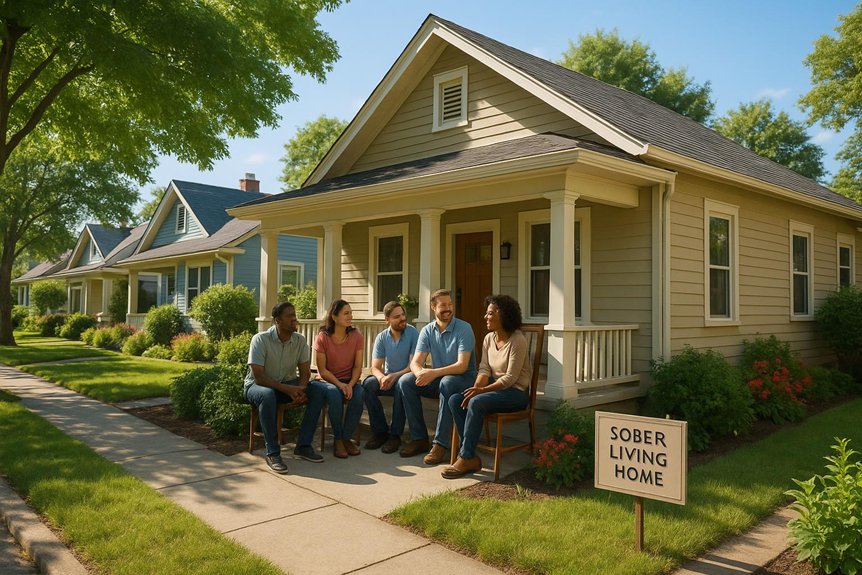
What Is a Sober Living Home?
You're considering a sober living home, and that's a brave step. These homes offer a safe, drug-free space where you can shift from rehab to independent living. They focus on community, accountability, and personal growth, helping you build a strong support network. Curious about how this environment can boost your recovery journey and equip you with essential life skills? There's much more to explore about their unique benefits and supportive structures.
Why Consider Sober Living Homes for Recovery?
When you're traversing the challenging path of recovery, sober living homes can offer the stability and support you need. These environments provide a structured, safe haven where you can focus on healing without the distractions or temptations of everyday life.
With sober living benefits, you’ll find a community that shares your journey, offering encouragement and accountability. You'll have access to recovery support that fosters personal growth and responsibility, essential for long-term success.
It’s about creating a new lifestyle, where healthy habits replace old patterns. Here, you’re not alone; you’re surrounded by others who understand and share your goals.
Find sober living near you. Our directory includes over 25,000 recovery housing facilities nationwide. Call (866) 453-5762 or browse the directory.
Embracing this supportive community can make all the difference, helping you build a resilient foundation for a sober future.
Defining Sober Living Homes: Key Features
Understanding what makes sober living homes unique is essential for anyone considering this path to recovery. These homes provide a supportive environment that fosters community engagement and emotional resilience.
You’ll find a structured setting where you’re surrounded by peers who understand your journey. This shared experience builds a sense of belonging and accountability.
Key features include:
- Community Engagement: Regular group activities and meetings to strengthen bonds.
- Emotional Resilience: Support systems that help you cope with challenges.
- Structured Environment: Clear rules and routines promoting stability.
- Peer Support: Living with others who share similar goals and experiences.
- Personal Growth Opportunities: Workshops and programs aimed at skill development.
Choosing a sober living home can be a crucial step towards a healthier, more fulfilling life.
Sober Living vs. Rehab Centers: Key Differences
While both sober living homes and rehab centers aim to support recovery, they serve different roles in the journey.
In rehab centers, you’ll find structured treatment modalities focused on intensive therapy options, catering to various addiction types. These centers emphasize emotional healing through professional guidance.
In contrast, sober living homes provide a supportive environment where recovery philosophies focus on gradual reintegration into daily life. Living arrangements here foster community involvement and peer support systems, essential for relapse prevention.
A supportive haven where gradual reintegration and peer support are key to preventing relapse.
Unlike the structured rehab setting, sober homes offer more freedom, encouraging personal responsibility.
Rehab comparisons highlight how each setting complements the other. Rehab centers address immediate treatment needs, while sober living homes support long-term sobriety through nurturing community connections and ongoing recovery support.
Choosing Sober Living: Why It Matters
Choosing a sober living home plays a vital role in sustaining recovery after rehab. It’s not just a place to stay; it’s where you’ll continue your recovery journey with essential support systems.
Sure, adjustment challenges are part of the process, but the sober living benefits far outweigh them. You'll find a community that fosters personal growth and helps you develop life skills important for long-term sobriety.
Consider these aspects:
- Structured Environment: Provides daily routines and accountability.
- Peer Support: Connects you with others who understand your journey.
- Life Skill Development: Teaches budgeting, cooking, and more.
- Safety and Stability: Offers a substance-free environment.
- Personal Growth Opportunities: Encourages new hobbies and interests.
Choosing wisely can make all the difference in your recovery journey.
Benefits of Sober Living Environments
Although it might seem intimidating at first, embracing a sober living environment can be transformative in your recovery journey. You'll find emotional support from others who understand your struggles and celebrate your recovery milestones.
These homes emphasize relapse prevention by providing accountability partners and life coaching to help you develop effective coping strategies.
Relapse prevention is emphasized through accountability partners and life coaching, fostering effective coping strategies.
Engaging in social activities fosters personal growth and builds meaningful connections. You'll learn self-care practices and mindfulness techniques to maintain balance and focus.
This environment encourages you to set and achieve new goals, ensuring you're equipped with the tools needed for lasting recovery. Sober living homes offer a nurturing space where you're not just surviving but thriving, creating a foundation for a healthier, more fulfilling life.
What Does Daily Life Look Like?
In a sober living home, your daily routine is structured to support your recovery and personal growth. You'll find yourself in an environment where building life skills is a priority. Each day is designed to help you develop habits that promote a healthy, balanced lifestyle.
Here's what a typical day might include:
- Morning meditation or mindfulness exercises to set a positive tone for the day.
- Scheduled chores and responsibilities to instill a sense of accountability.
- Group therapy sessions that offer guidance and understanding.
- Time for personal reflection or journaling to explore your thoughts and emotions.
- Evening activities, such as cooking classes, to enhance your life skills.
These routines are crafted to provide structure while encouraging you to grow and thrive.
Building Community and Support Networks
Building a supportive community is at the heart of your journey in a sober living home. Here, you’ll find strength in shared experiences and personal stories. Engage in community events and social activities that foster relationship building. Support groups and mentorship programs provide guidance and understanding.
| Activities | Benefits |
|---|---|
| Community Events | Build relationships |
| Support Groups | Share experiences |
| Volunteer Opportunities | Give back and grow |
Participate in volunteer opportunities to connect and give back. Group outings offer a chance for conflict resolution and strengthening bonds. Embrace the mentorship programs that guide you through challenges. Each interaction, whether through support groups or social activities, enriches your path to recovery. You’re not alone; this community walks with you.
Rules and Structures: What to Expect
In a sober living home, you'll find that curfew and visitation policies are in place to help maintain a focused and supportive environment.
You'll also have chores and responsibilities that contribute to the community's well-being, giving you a sense of purpose and routine.
These structures are designed to support your recovery journey, offering a balanced mix of guidance and independence.
Curfew and Visitation Policies
While adjusting to life in a sober living home, understanding curfew and visitation policies is vital for fostering a stable environment.
Curfew enforcement helps maintain order and guarantees everyone’s safety. Knowing what time you need to return home keeps you accountable and respects the community’s needs.
Visitation etiquette is equally important. It’s essential to make sure that guests don’t disrupt the living space, allowing everyone to focus on recovery.
Here’s what to expect:
- Curfew times: Set to promote restful environments.
- Sign-in sheets: Track your return and keep accountability.
- Visitor hours: Specific times for hosting guests.
- Guest limits: Restrict the number to maintain tranquility.
- Quiet hours: Reduce noise to support a peaceful setting.
Embrace these guidelines; they’re designed to support your journey.
Chores and Responsibilities
Understanding curfew and visitation policies lays the groundwork for a balanced life in a sober living home. Equally important are chores and responsibilities. You’ll find cleaning schedules that promote shared responsibilities, ensuring everyone contributes to a well-kept environment.
Chore assignments are key in maintaining this balance, fostering teamwork dynamics that build trust and cooperation among residents.
Personal upkeep isn’t just about cleanliness—it’s about developing a routine that supports your recovery journey. Embracing these tasks enhances discipline and accountability measures, empowering you to take charge of your progress.
Encouraging Accountability in Recovery
In your journey through recovery, embracing accountability is key, and it often begins with the support of peers who understand your struggles.
By sticking to structured daily routines, you'll find a rhythm that strengthens personal responsibility and fosters growth.
Peer Support Networks
Amid the journey to sobriety, peer support networks play an essential role in fostering accountability and growth. You’ll find a sense of belonging and encouragement through peer mentorship and community involvement.
These connections provide valuable insights and shared experiences that help you navigate challenges.
- Peer Mentorship: Gain guidance from those who’ve been where you are.
- Community Involvement: Engage in activities that strengthen bonds and build trust.
- Shared Experiences: Learn from others’ stories and find comfort in knowing you’re not alone.
- Accountability Partners: Stay on track with someone who understands your journey.
- Emotional Support: Receive empathy and encouragement during difficult times.
These networks are crucial in creating a supportive environment where recovery becomes a shared mission.
Structured Daily Routines
When you establish a structured daily routine, it becomes a cornerstone for accountability in your recovery journey. Embracing daily activities fosters routine stability, allowing you to focus on personal growth and emotional support.
In a structured environment, accountability measures guide you, helping to maintain a recovery focus and achieve life balance.
Engaging in skill development activities not only boosts your confidence but also reinforces your commitment to sobriety. By participating in community engagement, you strengthen your support network, which is essential for ongoing recovery.
Each step you take in this environment encourages a sense of responsibility and purpose. Remember, you’re not alone; your routine is there to support and guide you every step of the way.
Personal Responsibility Development
Taking charge of your own actions is a powerful step on the path to recovery. By embracing personal responsibility, you're empowering yourself to grow and adapt.
This journey involves developing self-discipline and self-awareness, which are essential for maneuvering life changes. You'll learn to set achievable goals and utilize motivation techniques to stay on track.
Building emotional resilience and effective coping strategies helps manage challenges.
Consider these supportive actions:
- Set clear goals to guide your personal growth.
- Find accountability partners who encourage progress.
- Engage with support systems for guidance and strength.
- Practice self-discipline to reinforce healthy habits.
- Develop self-awareness to understand your triggers.
How These Homes Help You Transition
Shifting from rehab to everyday life can be intimidating, but sober living homes provide a supportive bridge to help you navigate this change.
These homes offer several sober living benefits, such as a structured environment where you can gradually adjust to newfound independence. You’re surrounded by peers who understand your journey, providing invaluable emotional support. This shared experience fosters a sense of belonging and accountability, helping you stay focused on your recovery goals.
A structured environment and supportive peers foster belonging and accountability, keeping you focused on recovery goals.
In this nurturing setting, you’ll find that the encouragement of a community can make all the difference. You’re encouraged to participate in group activities, attend meetings, and build healthy routines, all of which reinforce your commitment to sobriety.
Trust the process, and you’ll find yourself growing stronger each day.
Essential Life Skills for Independence
In your journey toward independence, mastering essential life skills can make a significant difference.
You'll find that financial management, effective communication, and time management are key to building a stable and fulfilling life.
Financial Management Skills
Although managing finances can seem intimidating at first, developing strong financial management skills is essential for independence in sober living. You’ll find that grasping the basics of budgeting practices and financial literacy will empower you.
Start by understanding your income management and how to allocate resources effectively. Expense tracking is vital for identifying spending patterns and implementing saving strategies. Learning debt reduction techniques can relieve financial stress and promote stability.
Here’s how you can begin:
- Create a monthly budget to manage your income and expenses.
- Track every expense to spot areas where you can cut back.
- Educate yourself on financial literacy through online courses.
- Explore saving strategies to build an emergency fund.
- Learn investment basics to grow your wealth over time.
These steps will support your journey to financial independence.
Effective Communication Techniques
Mastering effective communication techniques is essential for cultivating independence in sober living. Start by practicing active listening and being present in conversations. This helps you understand others and respond thoughtfully.
Use assertive communication to express your needs clearly while respecting relationship boundaries. Recognize nonverbal cues, like body language, to enhance empathy building and connect deeply.
Engage in mindful dialogue with conversation starters that encourage open discussions. Conflict resolution requires patience; approach it with emotional expression that’s honest yet respectful.
Feedback techniques are vital—offer constructive insights and be open to receiving them. Remember, effective communication is a two-way street. By fostering these skills, you’ll create healthier relationships and a supportive environment that empowers your journey to independence.
Time Management Strategies
Building on effective communication, managing your time efficiently is another essential skill for achieving independence in sober living. You’re not alone in this journey, and mastering time management can truly empower you.
Start by embracing time blocking and priority setting to organize your day. These strategies help you focus on what truly matters, reducing stress and enhancing productivity.
- Time Blocking: Allocate specific hours for tasks to boost efficiency.
- Priority Setting: Identify urgent tasks and tackle them first.
- Daily Planner: Use a planner to keep track of your commitments.
- Break Tasks: Divide larger tasks into manageable steps.
- Review: Reflect on your day to adjust and improve.
Frequently Asked Questions
cost">How Much Does Living in a Sober Home Cost?
Living in a sober home costs can vary, typically ranging from $500 to $2,000 per month.
Affordability factors include location, amenities, and services offered. Some homes might accept insurance coverage, which can greatly reduce your expenses.
It’s important to explore your options and understand what fits your budget.
Can Family Members Visit Residents in Sober Living Homes?
Yes, family members can visit residents in sober living homes.
It’s essential to check the specific visitation policies of the home, as they can vary. Family support plays a significant role in recovery, and these homes often encourage it.
You’ll want to coordinate with the staff to find suitable visiting times, ensuring your loved one feels supported without disrupting their recovery routine.
Open communication makes all the difference.
Are Pets Allowed in Sober Living Facilities?
Yes, pets are sometimes allowed in sober living facilities, but it depends on the specific pet policies in place.
You should check the rules, as they can vary widely. Some places might make exceptions for emotional support animals, recognizing their important role in recovery.
It’s essential to communicate openly with the facility. Understanding their policies guarantees a supportive environment for both you and your furry friend.
What Is the Average Duration of Stay in a Sober Living Home?
Typically, your stay in a sober living home lasts around 3 to 12 months.
Duration factors like personal progress, financial stability, and support systems influence this.
It’s vital to follow stay recommendations from counselors who understand your journey. They’re there to help you shift smoothly.
Remember, it’s your path to recovery, and taking the time you need is essential.
You’ve got this, and support is always available.
How Are Sober Living Homes Funded and Regulated?
Sober living homes rely on various funding sources like private pay, insurance, and government grants.
You’ll find that regulatory standards can differ by location, ensuring safety and quality. It’s essential to check local guidelines to understand how they’re maintained.
Need help finding sober living? Call (866) 453-5762 for help finding recovery housing near you. Confidential and available 24/7.